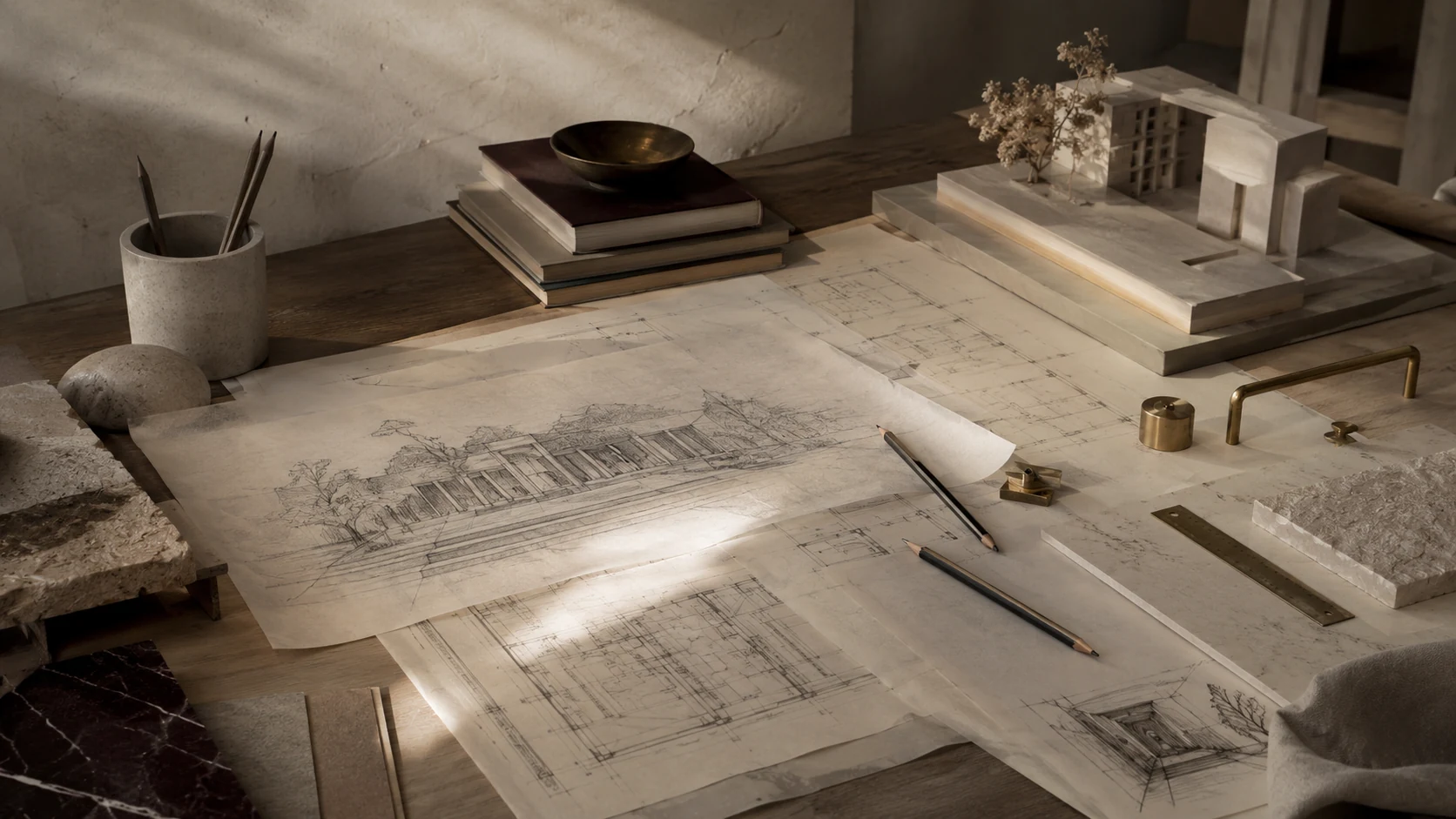
There is a quarry outside Bardstown, Kentucky, that we have sourced from since the third commission of our practice. We did not, in 2010, set out to specify the same limestone for fifteen years. We set out to specify the right stone for a parlor floor in a 1908 house on Wentworth Street, and the right stone, after considerable testing, turned out to be the stone from Bardstown. We have never had reason to change our mind.
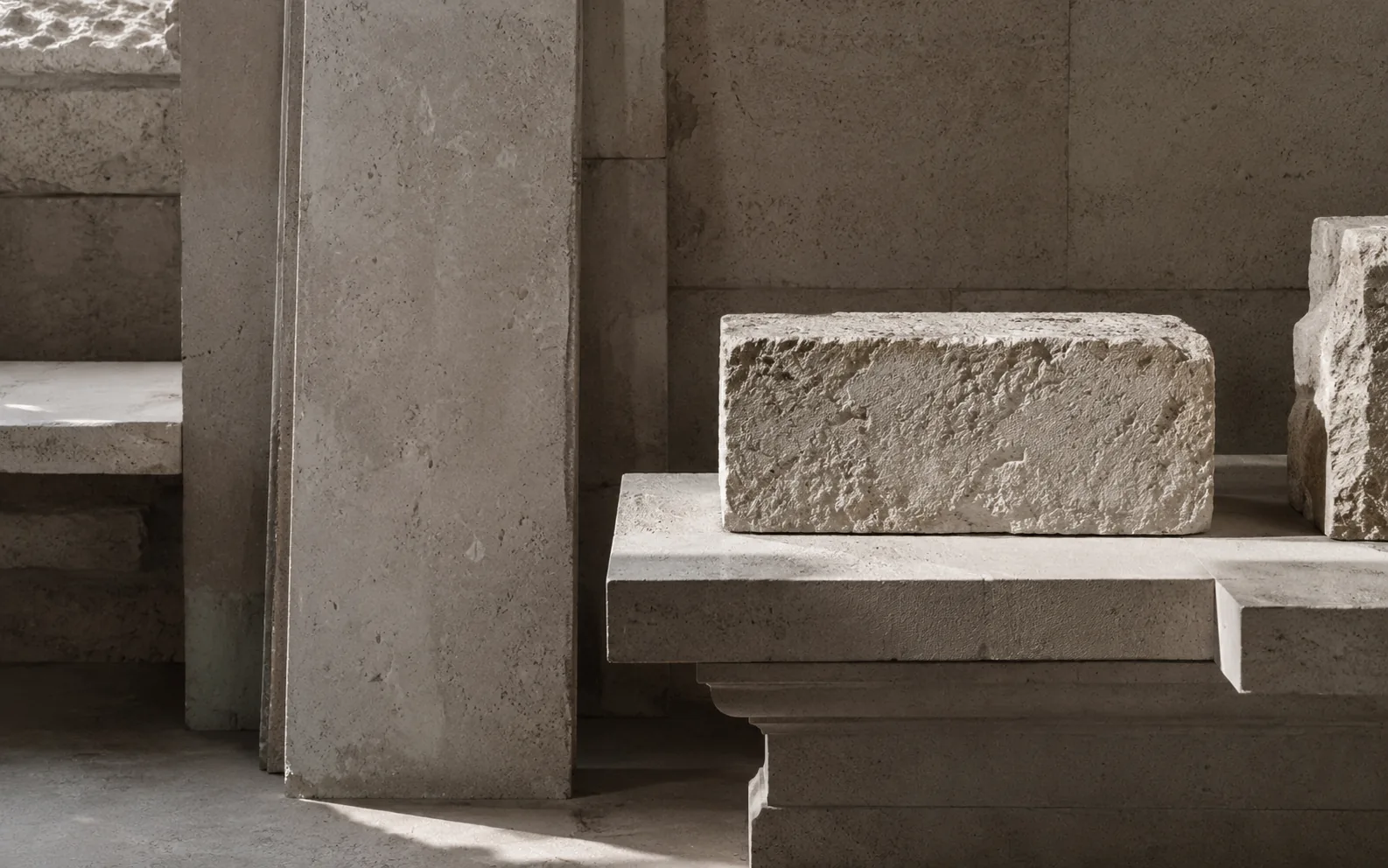
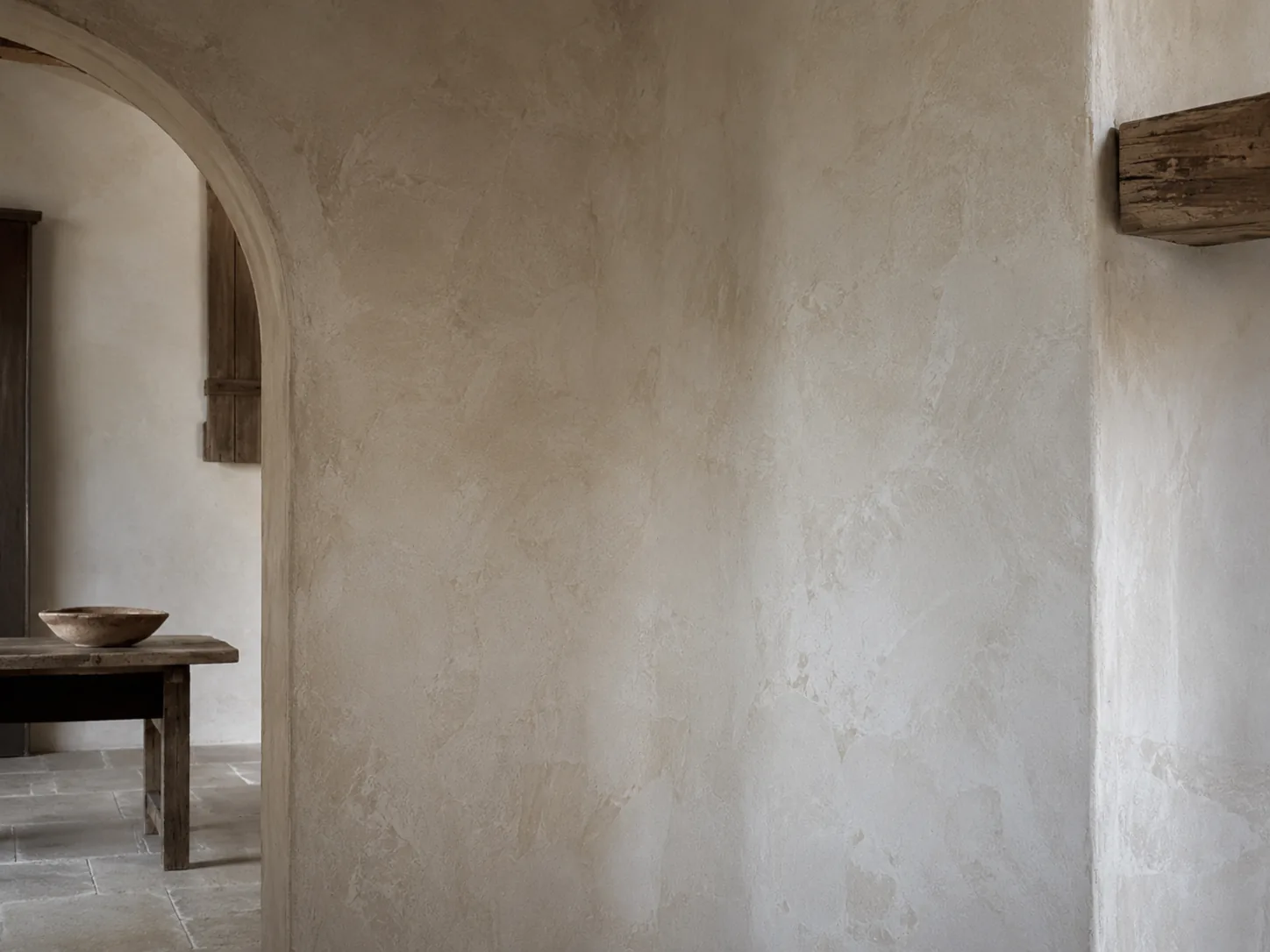
It is not the most expensive stone in our materials library. It is not even the most beautiful, in the photogenic sense — the photograph of it is usually disappointing, a quiet warm-gray that the camera flattens into something more ordinary than the thing itself. It is, however, the most honest stone we have ever worked with. It cuts cleanly. It honestly takes a hand-honed finish. It accepts wax. It darkens at the edges over twenty years in the way that limestone is supposed to darken, the way the threshold stones at the cathedrals in Burgundy have darkened. It does, in other words, what it says it will do.
There is a great deal said, in architectural writing, about the importance of material. Most of it, in my view, is sentimental — the kind of writing that reaches for words like soul and warmth when the writer has run out of more specific things to say. What we actually mean, when we speak about material, is that we are choosing what time to participate in. A piece of stone is a decision about chronology. It says: this room intends to last several human lifetimes, and these are the geological conditions under which it intends to do so.
This is the part of our work I find most clients are not prepared for. They arrive imagining that the difference between two stones is aesthetic. They leave understanding that the difference is closer to ethical — that we are not selecting a finish but committing the house, on their behalf, to a particular relationship with time.
On the working life of a quarry.
The Bardstown quarry has been operating, in one form or another, since 1847. The current owner is the great-great-grandson of the man who opened it. He drives a 1996 Ford pickup that I have, by my own count, ridden in eleven times. He knows our project leads by name. When we specify a particular grade of stone, he sometimes calls us — by which I mean Theodore, but it is often me — to suggest a slightly different cut, drawn from a particular face of the quarry he has been holding for the right project. He has, twice, refused to sell us stone he thought was not yet ready, on the grounds that the bedding planes had not relaxed enough since extraction.
This is, I am increasingly aware, an unusual relationship. Most architects buy stone through brokers, from catalogs, with a lead time measured in weeks. We buy stone from a man we have known for fifteen years, from a single face of a single quarry, with a lead time sometimes measured in years. The expense — the additional expense of doing it this way — is roughly fifteen percent, against industry-standard sourcing. It is the best fifteen percent we spend.
What slow material teaches a practice.
I think, lately, about what fifteen years of returning to the same quarry has done to our practice. Not what it has done to our buildings — that is more obvious, and easier to talk about — but what it has done to us. We have been forced, by the rhythm of that quarry, to plan further out. We have learned to commit to material specifications six months before construction documents. We have learned to refuse certain commissions on the grounds that their timeline does not allow our material rhythm. We have learned to say, to a client, we cannot have this stone in time for your move-in, and we will not substitute, and to mean it.
I think this has made us better architects. I am certain it has made us a slower practice, which is the same thing.
The stone, meanwhile, continues to do what stone does. It sits where we have placed it. It accepts the touch of feet, the spill of wine, the patient attention of the families that live with it. It darkens at the edges. In a hundred years, when the building has settled into the kind of quiet middle age I hope our buildings settle into, the stone will still be there, doing its slow honest work.
This is, ultimately, the case I want to make for material patience. It is not a romantic argument. It is a practical one. The patience of the stone teaches the patience of the architect, and the patience of the architect teaches the patience of the room. Buildings made in haste are recognizable, decades later, as having been made in haste. Buildings made slowly are recognizable as something else.
I do not know what that something else is, exactly. I only know it when I am standing in it.